
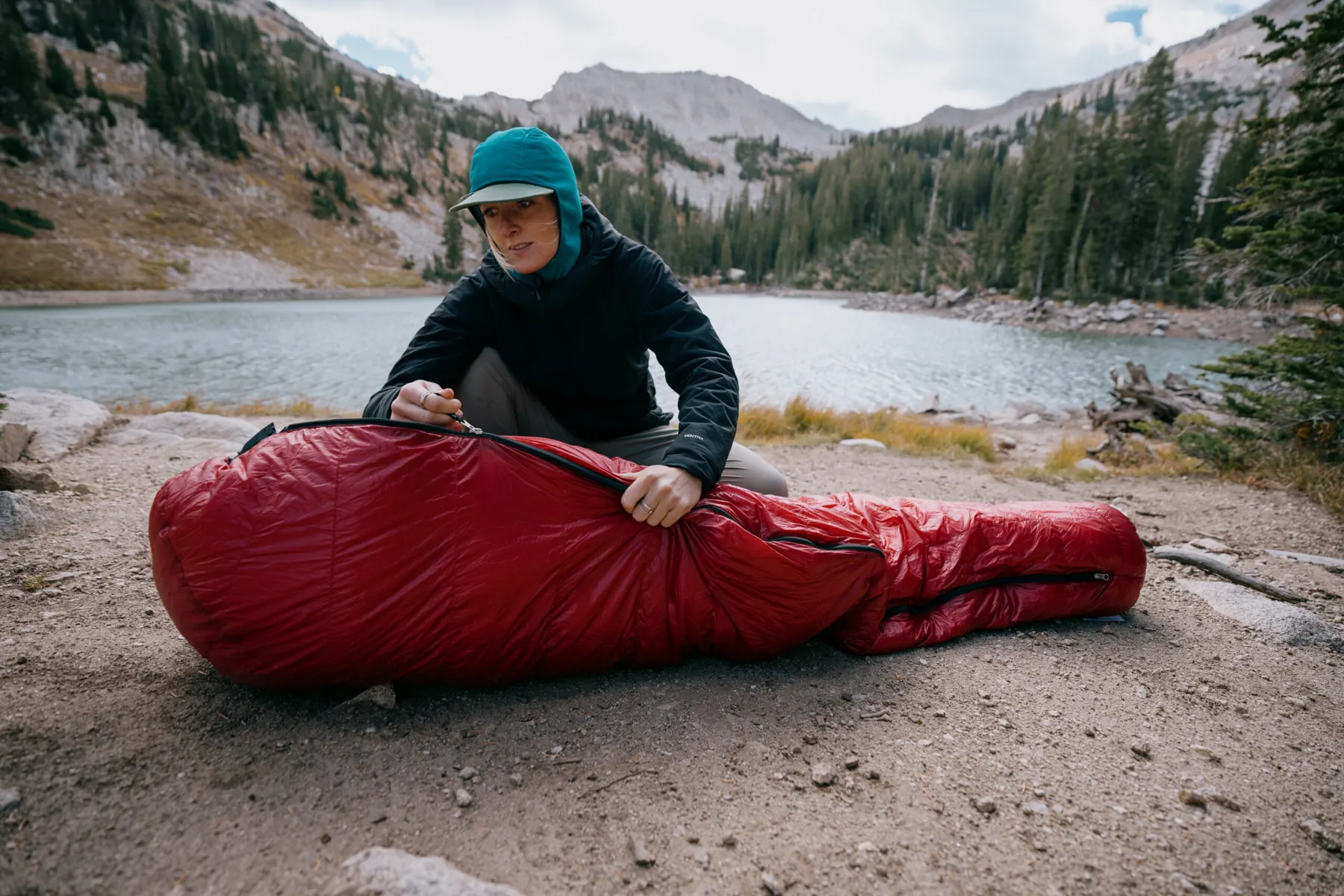
Sleeping bag selection guide
Every Western Mountaineering sleeping bag is made by hand in our San Jose, California factory, but the right one for you depends on four things: how cold it will get, how you like to sleep, the conditions you will face, and how tall you are. Answer the questions below for a short list of models, or read on for the details behind each choice.
Find your bag
The details behind each choice
1. Temperature rating
Start with the coldest night you expect on a typical trip, not the average. Our ratings come from extensive field use and carefully calculated fill weights, and they usually fall between the EN/ISO "limit" and "comfort" figures. They assume you are using a well-insulated sleeping pad (around R 5.0 or more in colder conditions), wearing dry base layers and a pair of socks.
- Choose a rating at or a little below your coldest expected night. A bag rated well below what you need is heavier and can feel too warm.
- If you sleep cold, add a margin of about 10°F (5°C). If you sleep warm, you can choose a little closer to the forecast.
- Your pad matters as much as your bag. Down underneath you compresses, so the ground pad provides most of the insulation below you.
- Between ratings, or sleep cold? Most of our bags can be ordered with an overfill, extra down that adds about 5°F of warmth. Add it on the bag’s product page. Learn more about overfills
Read more about how we rate our bags on the temperature ratings page.
2. Shape and fit
A closer fit means less air for your body to heat, so a snug bag is warmer for its weight. A roomier bag lets you move, sleep on your side or wear extra layers. Compare the inside shoulder girth on each product page: many of our temperature ratings come in both a standard and a wider cut.
3. Shell fabric: choosing a series
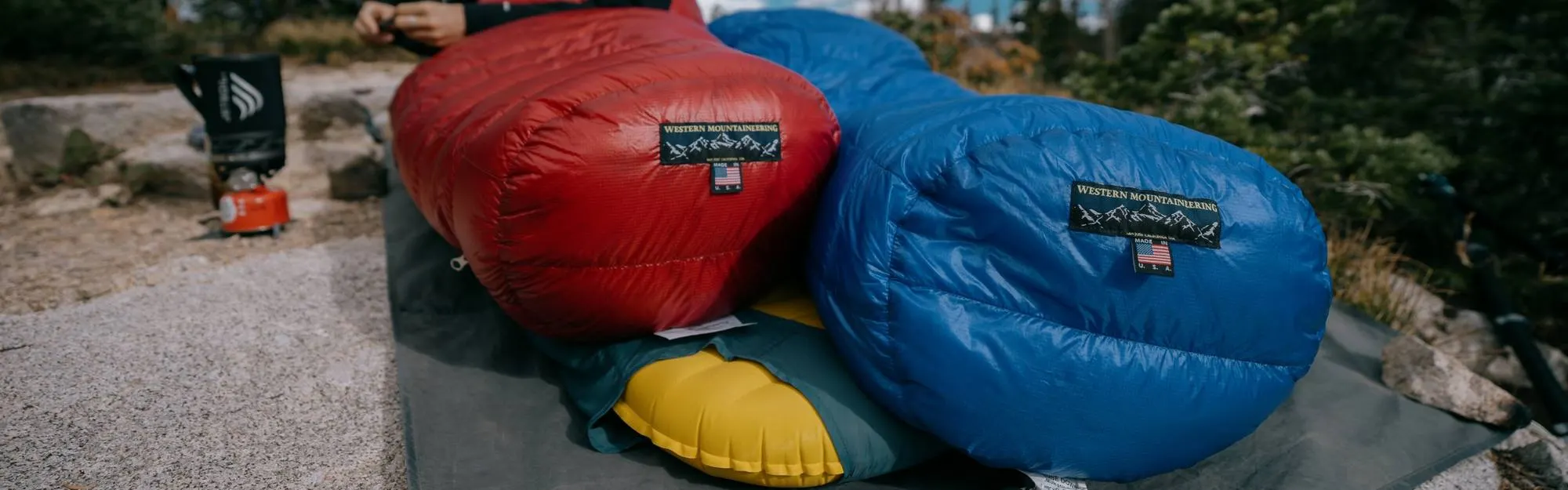
Each series pairs the same premium goose down with a different shell fabric. Heavier, more protective shells keep the down dry in wet, windy or frosty conditions, at a small cost in weight.
The weight difference is modest. The 5°F Antelope, in a 6'0" length, weighs 2 lb 7 oz in Microfiber and 2 lb 10 oz in StormShield.
4. Length
Our bags are sized to fit people who measure at or slightly under the listed length, so a 6'0" person fits comfortably in a 6'0" bag. Most models come in 5'6", 6'0" and 6'6", and several are also made in 7'0". If you are between sizes, or like to keep clothes, water bottles or boot liners inside on cold nights, go up a size.
5. Weight and packed size
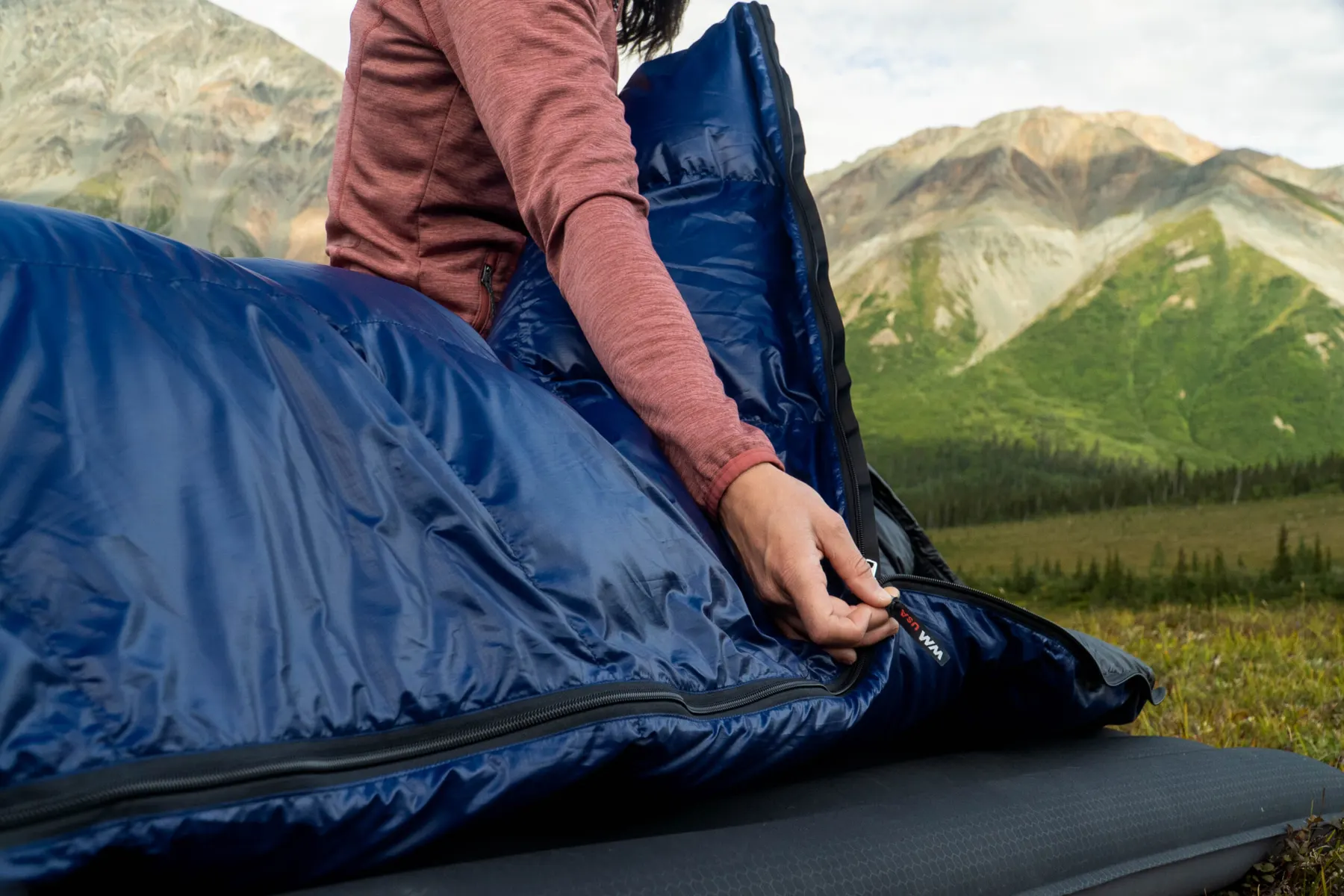
Once you have narrowed it down, compare total weight, stuffed size and minimum compressed volume for every length in the sleeping bag spec chart. For zipper side, most right-handed people choose a left zip (LZ), since it feels natural to reach across the body with the dominant hand to zip and unzip.
Still deciding?
Find a dealer near you to see our bags in person, or contact us with where you are going and how you sleep, and we will point you in the right direction.